
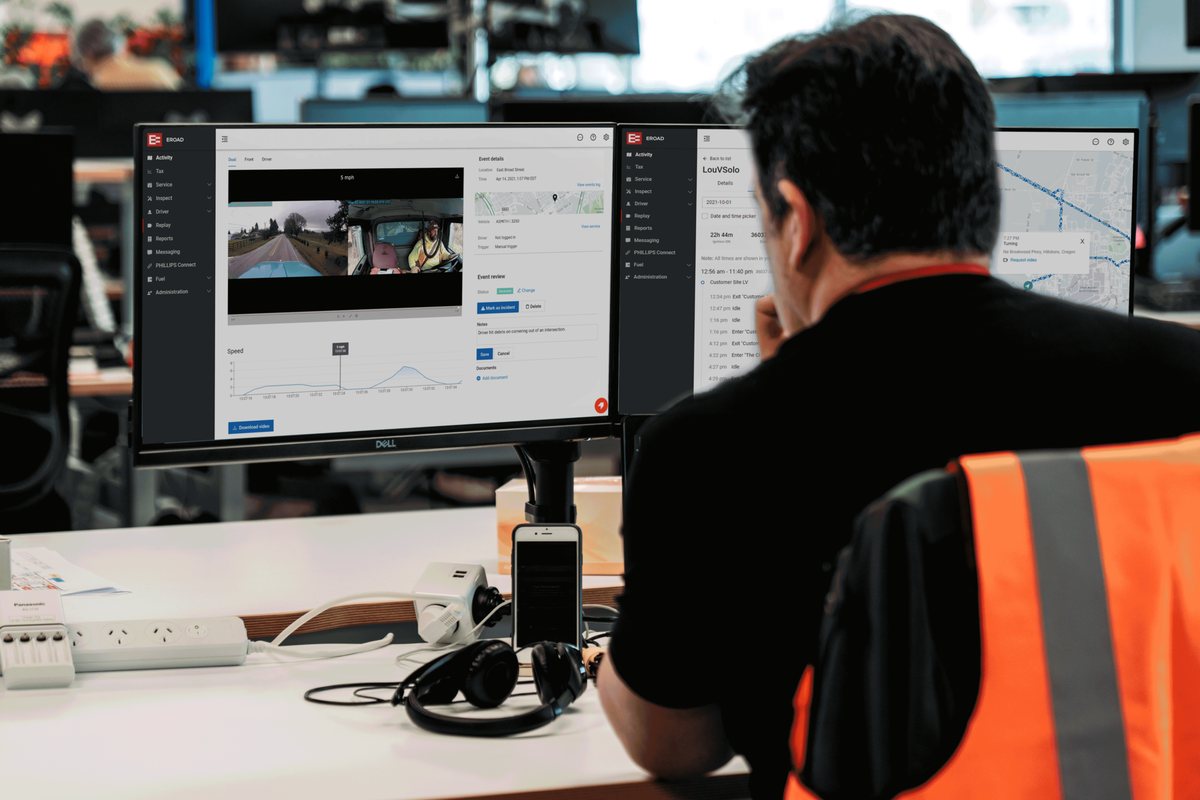


The question behind every store rejection: Was the product genuinely at risk or did the operation lack the information to make the right call?
By Jim Brailey, Executive General Manager North America, EROAD
10 November 2026
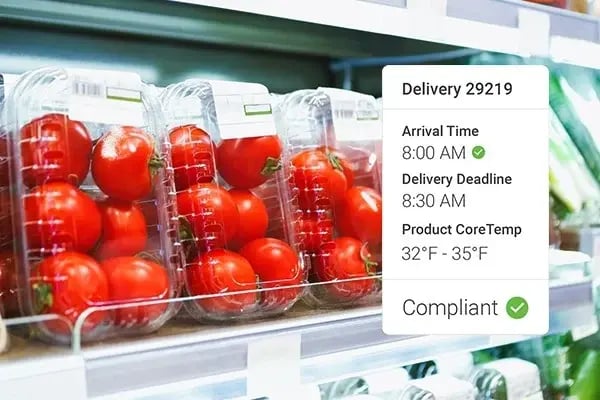
A refrigerated load arrives at the store, fails a temperature check and is rejected. The retailer loses the product, the freight and the shelf availability that went with it. Yet in most grocery operations, no one can say with confidence whether the product was actually compromised.
That is the real problem. Receiving decisions are made at the end of the trip, with the least information, when the only option left is to absorb the loss. Retailers do not need to reduce rejections at any cost. They need to stop making cold chain decisions at the end of the journey. The cold chain should be managed as a continuous, product-level record that follows each load from the DC to the store door.
A trailer reading is not product condition
Trailer air temperature matters, but it does not show whether the product stayed within range. A trailer can arrive reading within range while the product was affected earlier, during pre-cool, loading, staging, a yard delay, door-open events, an incorrect operating mode or an equipment fault on the road.
So, the question at the dock should not be, “What was the trailer temperature on arrival?”. It should be: “What did this product experience from loading through delivery, and where did the process move outside the Standard?”
Without that answer, store teams are left with a trailer reading and a probe. The error runs both ways: good product is rejected, and at-risk product may be accepted. Meanwhile, food safety, transportation, warehouse and maintenance teams each hold one piece of the picture, and time goes on debating whether a rejection was justified rather than fixing what caused it.
What the current approach costs
A rejected load is both a quality event and a service event. Rejected product is typically written off in full. Returns to the DC are increasing, with limited visibility into what happens to that product once it is back. Reloads triggered at the gate, yard check or by the driver add labor cost before the trailer has left the DC. Leading retailers are spending nearly $1M in incremental labor on reloads within a single year. Delayed loads, consumed dock capacity and store out-of-stocks add further cost that is harder to measure.
The same blind spot drives reefer costs. Major grocery retailers find that most of their reefer runtime occurs in the yard, not on the road. But yard time is rarely separated from route runtime, so it is hard to tell whether fuel use and equipment wear come from transport activity, pre-cool duration, loading delays, staging practices or set points. As retailers bring transportation and refrigerated equipment under their own control, they take on that fuel, maintenance and equipment-failure risk as well.
The problem is not a lack of data. It is that the data does not connect.
Most large retailers already know where their trailers are. They see air temperatures, and many have fuel, runtime, fault and maintenance data. But distribution center, transportation, store and food safety teams each see only their own slice, and none of it follows the product’s journey. Those priorities are all valid, but the product experiences one journey, not separate warehouse, transport, fleet and store processes.
The answer is not more dashboards, or asking store teams to make faster judgment calls. It is connecting the data that already exists and adding what is missing: product temperature. That rests on five capabilities:
- Internal product temperature monitoring from load to delivery. Receiving decisions are based on what the product experienced, not just the air around it.
- One shared trip record. Internal product temperature, reefer operation, door events, yard dwell, pre-cool activity, set points and location sit in a single record that the DC, transportation, store, food safety and maintenance teams all work from.
- Early alerts and remote intervention. An excursion is flagged while the truck is still in the yard or on the road, and the reefer can be adjusted remotely, so the problem is corrected before it becomes a rejection. Predictive shutdown alerts give early warning of equipment failure.
- Yard and road performance measured separately. Pre-cool duration and yard runtime become visible and controllable, so operating standards can be set and enforced.
- Root-cause learning and audit-ready evidence. Rejections, reloads and excursions can be traced by lane, DC, door, equipment or process step, giving teams an objective record for food safety, carrier and supplier conversations.
What it is worth
- Product and service: Fewer avoidable rejections, because loads that were fine can be accepted with confidence. Fewer genuine failures reach the store, because they are caught earlier. Both mean better on-shelf availability.
- Labor and capacity: Fewer reloads and returns recover labor hours and dock capacity.
- Fuel and equipment: Controlling yard runtime and pre-cool practices reduces fuel use and equipment wear. Predictive alerts reduce in-transit failures.
- Food safety and accountability: An evidence trail replaces after-the-fact reconstruction and speeds up dispute resolution.
This does not require a network-wide rollout. Start with one DC and a set of high-volume lanes. Baseline the current rejection, return and reload rates and the yard-versus-road runtime split. Then measure what changes once the product’s journey is visible.
The retailers that gain most will not be those that explain exceptions best. They will be the ones that stop asking “why was this load rejected?” and start asking “why did we let it get that far?”
How EROAD can help grocery leaders deliver stronger service, productivity and quality
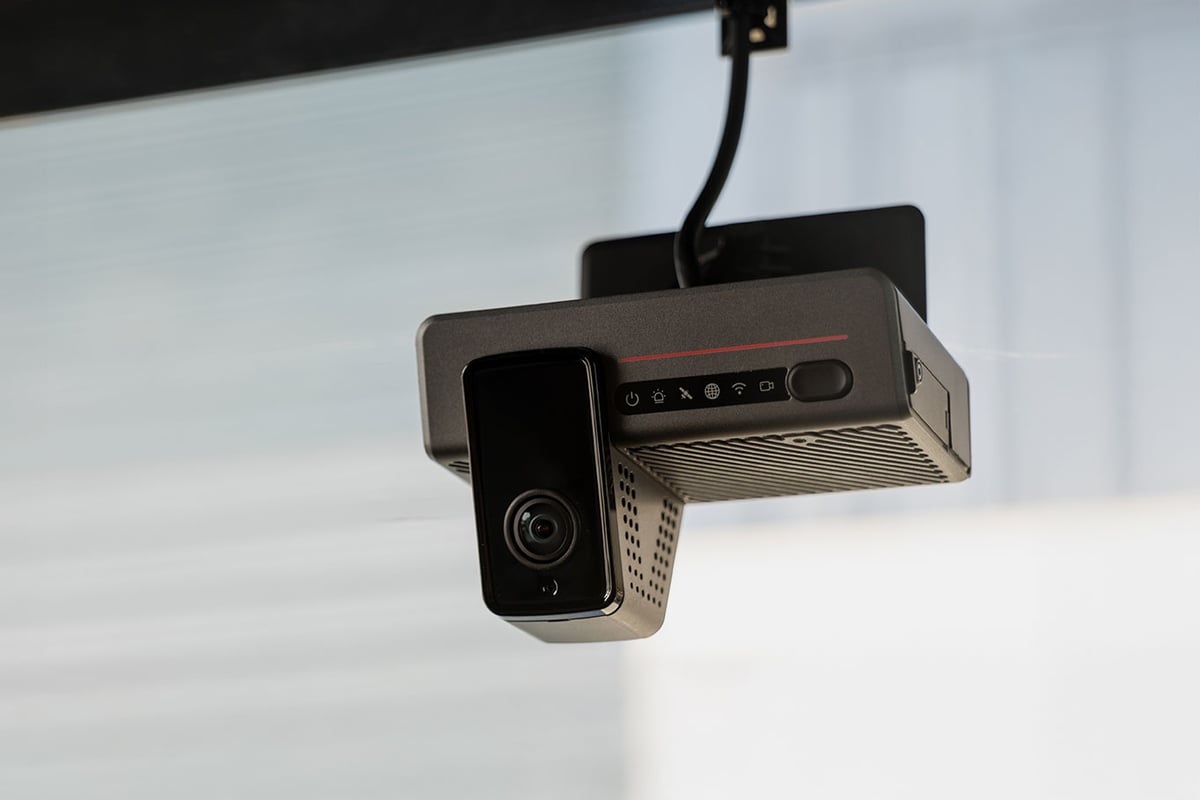
EROAD helps grocery leaders turn cold chain visibility into operational advantage. As a complete cold chain assurance platform, EROAD provides real-time temperature monitoring, door activity, fuel levels and refrigerated asset performance across the fleet. By combining predictive reefer health, automated alerts, two-way remote reefer control and pre-cool optimization insights, teams can identify risks early, prevent costly disruptions and maintain efficient operating procedures. Unlike traditional monitoring solutions that simply report data, EROAD delivers actionable intelligence through predictive analytics and CoreTemp product-level temperature monitoring - helping grocery operators protect product quality, reduce waste, improve asset utilization and consistently deliver fresh products from distribution center to store with a reliable audit trail for compliance and customer assurance.