One platform, every kind of work.
The record each industry has to keep, kept for it.
Chain of Responsibility
The record your industry has to keep
See compliance
Choose the right solution for your fleet.
The outcome first, then the kit that delivers it.
Explore the full range of EROAD products.
Each range opens on the page that compares it.
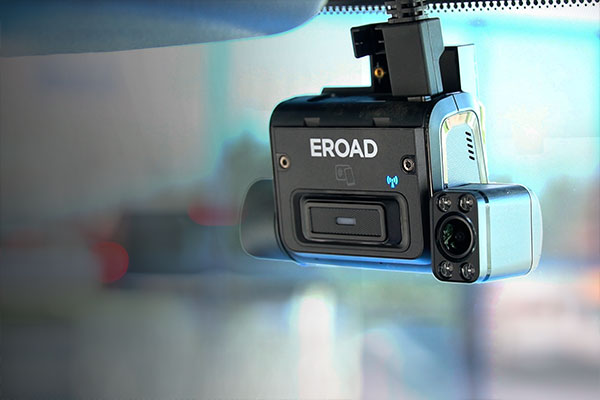
Get the full picture with Clarity. When something goes wrong, you need to see what actually happened. And with AI-powered cameras, you can catch warning signs like fatigue or distraction before they lead to an incident.
A complaint, an insurance claim, a near miss nobody agrees about. With Clarity, you don't have to rely on eyewitness accounts, or decide who to believe. You can see exactly what happened - and quickly.
Clarity Edge AI cameras can also spot the signs a driver won't notice in themselves - eyes closing, frequent blinking, distraction - and alert them in the moment, with a notification back to your team so you can check in.
Choose the right dashcam set up for your vehicles. Options range from one to six camera angles, and you can choose whether to turn on AI monitoring for advanced driver safety and fatigue management.
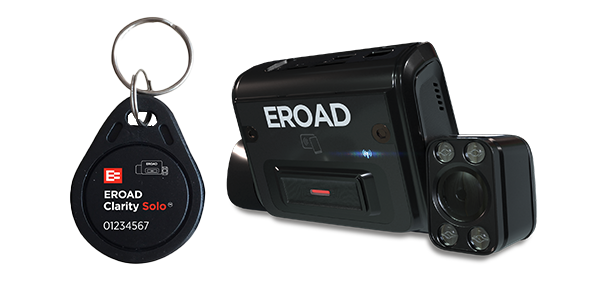
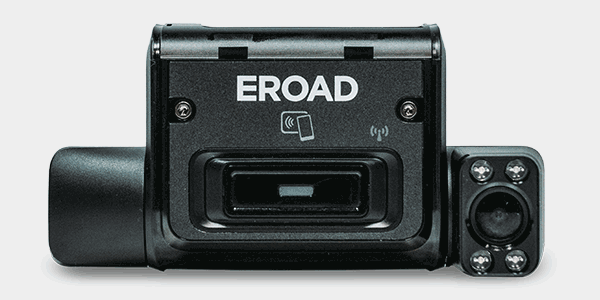
Clarity Solo
Standalone dashcam
Works on its own, no other EROAD unit needed
Choose unlimited clip views or pay-as-you-go
A fob login shows who was driving
See Clarity Solo →
Clarity Connected
Dashcam only. Requires telematics
Road and cab views in every clip
Stores up to 40 hours of driving
No input needed from the driver
See Clarity Connected →
Clarity Edge
AI dascham. Requires telematics
Optional voice alerts for fatigue and distraction
Back office notifications
Option to add Fatigue camera and Seat Shaker
See Clarity Edge →
Clarity Edge Multicam
AI dashcam. Add side, rear, cargo cameras
Up to six camera angles around the vehicle
Live view in the cab, on an optional display
All the angles in one incident record
See Multicam →
Telematics
Clarity Locate
Telematics only
Great starter telematics for cars, utes and vans
Speed and location reporting
Option to upgrade to telematics + video at a later date
See Clarity Locate →
Our dashcams all trigger a recording based on harsh events or AI detections. For heavy vehicles, a record button can also be fitted to let drivers capture events manually.
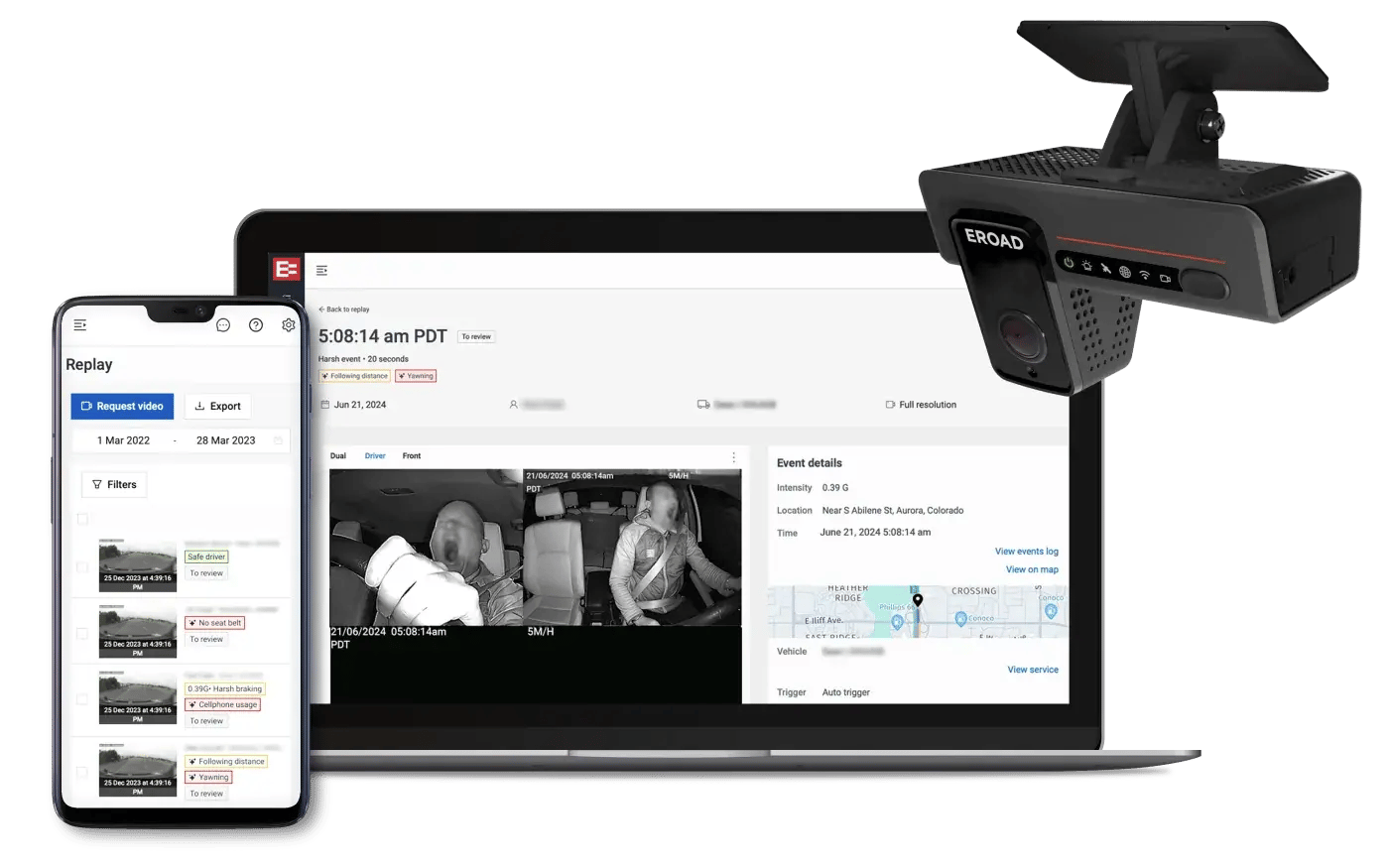
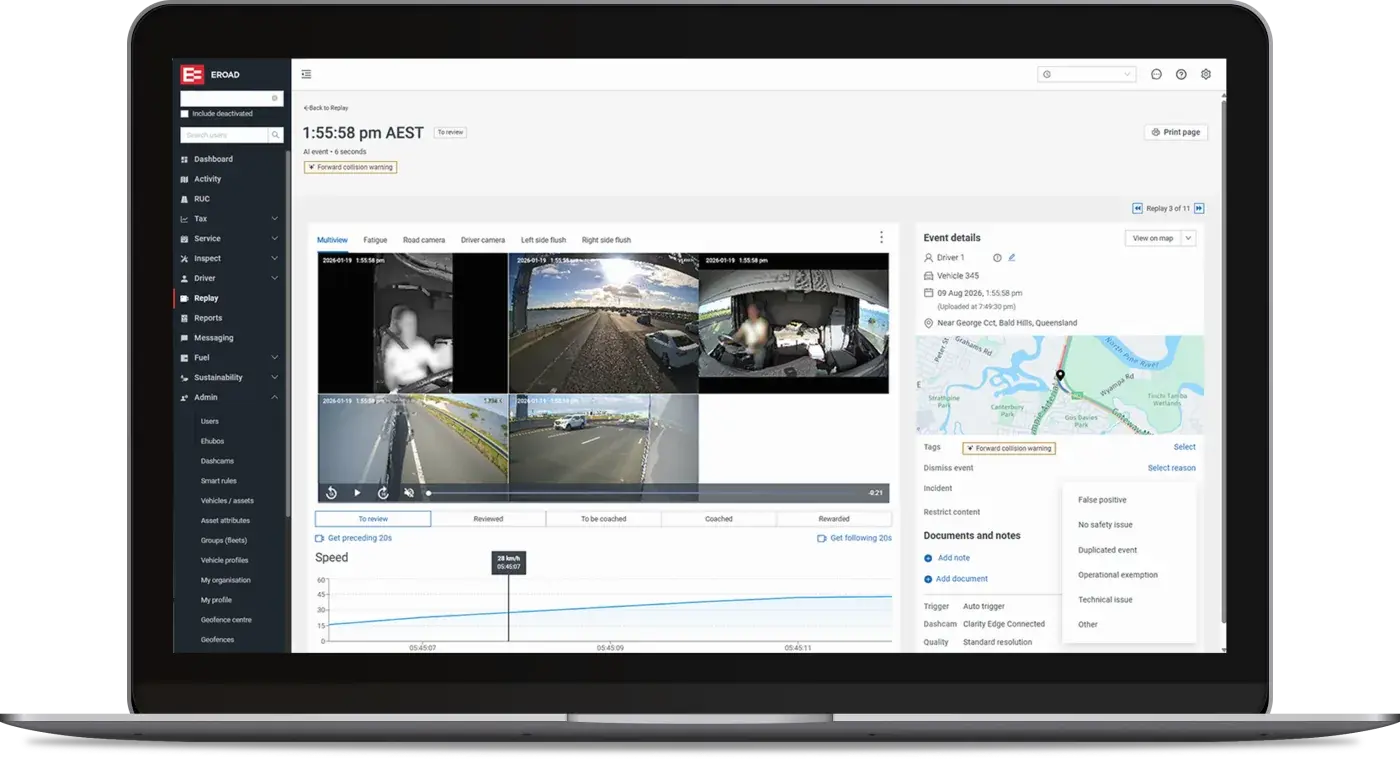
Replay is your video viewing module. Built in the same platform where you view your fleet activity and reporting. Coaching and incident investigation become much faster, because you have video, location, vehicle activity, trip data and driver details linked together.
In the event of a complaint or incident, video and trip data quickly build a picture of exactly what happened - so you can exonerate not-at-fault drivers quickly.
Each clip arrives tagged with what set it off, hard braking or fatigue for instance. Filter for the riskiest behaviour and you'll know which conversations to have first.
Clarity dashcams help protect driver privacy. Clips upload when: a driver pushes the button, a harsh event triggers it, or AI detects a monitored behaviour.
Clarity Edge detects and alerts drivers to potential risks, including fatigue, distraction, or tailgating. Helping them to take action in the moment and keeping your team in the loop.
Replay is EROAD's video portal, built to make finding, reviewing and acting on footage as quick as possible.

The goal was for us to have informed conversations with our drivers and help them understand how they could become better and safer.
BOC rolled out dashcams to their fleet with a focus on improving driver safety
Yes. Coaching programs that combine video footage with real-time driver alerts have been shown to reduce accidents by up to 60%, according to independent research. A dashcam on its own is just a recorder — the safety benefit comes from pairing that footage with in-the-moment alerts and regular coaching, so drivers get feedback based on what actually happened, not just a policy on paper.
No — Clarity cameras are built to protect drivers, not monitor them constantly. Footage only uploads when a driver presses the manual record button, a harsh driving event triggers it, or AI detects a specific behaviour like fatigue or distraction. There's no constant live streaming back to the office, and audio recording is switched off by default.
A short clip is uploaded automatically when a harsh driving event happens (like hard braking), when AI detects something like fatigue, or when a driver chooses to record something manually. That means you get the footage that matters, without drivers needing to remember to hit record.
For incident investigation, a limited amount of continuous footage can be requested from the dashcam but how long its available is dependent on plan and SD card choice. Continuous recording is not uploaded by default.
A standard dashcam captures and uploads footage automatically after a harsh driving event - useful evidence for coaching and incident investigation after the fact.
An AI dashcam goes further: it actively watches for signs of fatigue and distraction in real time, even through sunglasses, and gives the driver a voice alert in the moment, with your team notified at the same time - so you can step in before something goes wrong, not just review it afterwards.
Yes. Video footage combined with location, speed and trip data gives you an objective record of what happened, rather than relying on driver or witness memory, which is often unreliable after a stressful event. This typically means insurance claims move faster and drivers who weren't at fault can be cleared sooner.
EROAD customers have even handed over dashcam footage at the scene of road accidents which cleared the driver of any wrongdoing immediately.
It depends on the camera. Some EROAD dashcams work as a standalone unit with no other device needed like Clarity Solo. Others are designed to work alongside a telematics device, combining video with your vehicle's location and driving data in one view. If you're not sure which set-up suits your fleet, that's exactly what a demo with us will help clarify.
In a demo, we'll show you how footage shows up in the platform with all its trip data and help you decide which camera suits your fleet.