Real-time monitoring of refrigerated assets
Moving more than 70 percent of the nation’s freight, the trucking industry is the driving force behind the U.S. economy. And when it comes to transporting perishable foods, motor carriers also play a major role in protecting the public’s health. Carriers are a key link in the cold chain, the process by which temperature-sensitive products make it safely from processing to end users, such as grocery stores and restaurants.
To ensure the safety of the temperature-sensitive products they haul and to comply with government regulations, carriers must maintain the appropriate temperatures in their refrigerated trailers. In this guide, we’ll provide an overview of the cold chain and the related regulations as well as cold chain temperature monitoring and technology solutions that can help carriers stay in compliance, reduce waste and make better business decisions.
The cold chain is a temperature-controlled supply chain. It involves the end-to-end temperature management of perishable commodities, such as food, beverages, pharmaceuticals and other temperature-sensitive products. The cold chain begins at production and processing and must be maintained through final delivery.
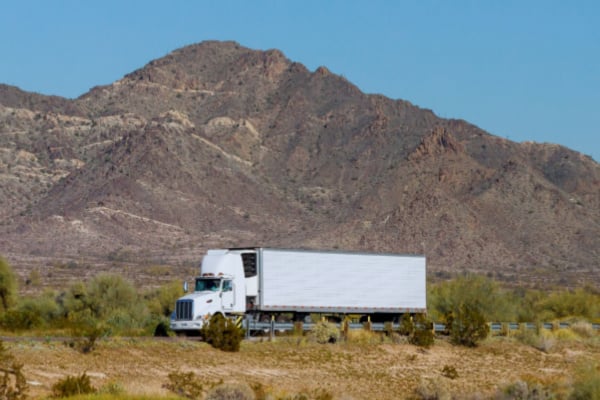
Transportation of temperature-sensitive products from processing plants to distribution centers and end users, such as grocery stores, is a crucial link in the cold chain. To safely transport temperature-sensitive products – most often food, according to the American Trucking Associations’ Technology & Maintenance Council – motor carriers use refrigerated trailers (also called reefers) to ensure that products are kept at the correct temperature.
Carriers also must keep records of the reefer temperature throughout transport. Traditionally, this entailed drivers stopping periodically to manually check the trailer temperature and recording it in a paper log. Today, however, technology solutions support more consistent, accurate and convenient reefer trailer temperature monitoring, helping carriers better ensure the safety of food and other temperature-sensitive products, reduce waste, avoid rejected loads, stay in compliance with government regulations, and increase customer satisfaction.
Each year in the U.S., tens of millions of people suffer from foodborne illness, with 128,000 people being hospitalized with foodborne diseases and 3,000 people dying, the Centers for Disease Control estimates.
While not all instances of foodborne illness can be traced to how the food was transported, maintaining proper temperature during transport can help prevent the growth of harmful bacteria that make people sick. Cold chain temperature monitoring, then, is crucial to ensuring that food products that require refrigeration are safe for consumers. And it helps carriers reduce the expense – and damage to their business reputation – associated with spoilage, waste and rejected loads.
Food safety regulations also require trailer temp monitoring. Among the most significant of these regulations is the Food Safety Modernization Act (FSMA), which was signed into law in 2011. One FSMA provision – the Sanitary Transportation of Human and Animal Food Rule – requires carriers to maintain “adequate temperature controls.” Carriers must also keep temperature records that show that appropriate temperature ranges were maintained during a trip.
Trailer temp monitoring entails tracking reefer trailer temperature to ensure that it is maintained at an appropriate level for the products being shipped. Failure to adequately track and maintain the reefer temperature can cause problems for consumers and carriers.
For consumers, unsafe temperature fluctuations during transport can raise the risk of foodborne illness, should the food make it to store shelves or restaurant kitchens. For carriers, it can result in loads being rejected, which is costly in a variety of ways, and can have a negative impact on future business opportunities.
Carriers use a variety of tools and methods to monitor reefer trailer temperatures, including temperature sensors, automated alerts for temperature fluctuations, manual temperature checks of products in transit and, increasingly, technology that uses advanced algorithms and artificial intelligence.
Artificial intelligence (AI) is revolutionizing reefer trailer temperature monitoring. This advanced technology helps carriers:
Key AI applications for cold chain temperature monitoring include:
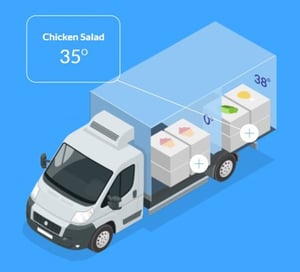
Real-time monitoring: AI continuously monitors reefer temps (and even individual compartments within a reefer trailer) in real time. AI algorithms collect and analyze temperature data throughout transit, providing have real-time visibility into the condition of the perishable goods being transported.
Elimination manual temperature checks: By supplying accurate core temperature predictions, AI solutions like EROAD’s CoreTemp eliminate the need for manual probing of products, reducing costs and eliminating the potential for human error or intentional falsification.
Predictive analytics and alerts: AI can compare real-time temperature readings with predefined thresholds and expected temperature patterns to identify and predict potential issues like temperature excursions, equipment malfunctions or door openings. Automated alerts can then be generated to notify relevant personnel, enabling timely actions to mitigate risks and ensure product quality.
Given the importance of cold chain temperature monitoring, many carriers are opting to automate truck temperature monitoring by adding reefer trailer management solutions to their fleets.
Reefer trailer temperature monitoring technology can help carriers more easily ensure proper temperature during transport and collect required temperature information – protecting consumers’ health and carriers’ bottom line. Beyond that, a technology solution can send customizable alerts to fleet managers and drivers that there is a potential issue with a reefer trailer, allowing them to fix the problem before the load is lost.
Reefer monitoring technology has revolutionized cold chain logistics, and carriers that implement it have a competitive advantage over those that don’t. However, not all solutions are created equal. Here are some key considerations to keep in mind when selecting a reefer trailer temperature monitoring solution.