In 2016, the electronic logging device (ELD) mandate began its first phase. Since then, several methods for logging hours of service (HOS) and commercial motor vehicle data have been phased out. As of December 16, 2019, ELDs are required by Federal Motor Carrier Safety Administration (FMCSA) across the industry.
Failing to keep up with ELD compliance will result in costly penalties. This guide is a look at the major components of the mandate, and what you can do to ensure that your fleet is ELD compliant.
ELD Compliance means installing and properly using an FMCSA-registered ELD to record hours-of-service in required vehicles. The following vehicles are subject to the mandate:
The advent of ELDs hasn’t changed the rules for HOS, but it has changed the way drivers record their hours. HOS rules and records of duty status (RODS) requirements fall under 49 CFR Part 395. At a minimum, drivers need to keep RODS when they report for a shift, when they end a shift and how much actual driving took place during a shift. The ELD mandate added a new Appendix to Part 395 with all the technical requirements that a compliant ELD must satisfy. Hundreds of pages exist to explain FMCSA ELD compliance requirements.
The raw ELD mandate digs deep into the history of hours-of-service logging. It also covers the legal process the FMCSA and US Department of Transportation went through to approve the mandate, to where we are today.
Related: What is an ELD?
The bill in Congress came up after a court vacated requirements for electronic onboard recording devices (EOBRDs). While EOBRDs first gained traction in the early 2000s, and while AOBRDs have been around since 1988, several loopholes and limited compliance made it easy to skirt the rules.
In almost 30 years since electronic logging first arrived, many changes have come and gone. The general idea is that a device will be faster and more accurate than HOS paper logs. The mandate serves to enforce safe driving habits, instead of having a driver falsifying their logs and driving well into overtime.
Failure to remain in compliance can result in penalties, drivers out-of-service and reputation damage. Enforcement has steadily increased since ELDs were introduced, and added lenience is not likely down the road.
Most of the more than 3.5 million CMV drivers across the nation are required to follow the mandate. There are some exceptions:
To be compliant, an ELD must be on the FMCSA’s ELD registry. That list also shows revoked devices, so be sure to check closely before ordering your ELDs.
Any drivers or carrier that is not using devices on the approved list, or whom cannot show/transfer data from an ELD when prompted, will be found to have “no record of duty status.”
That language comes from the Commercial Vehicle Safety Alliance’s update to out-of-service criteria. These changes, as outlined in a March 2019 letter, are mostly updates to specifically address ELDs, not overhaul the concept of being out-of-service.
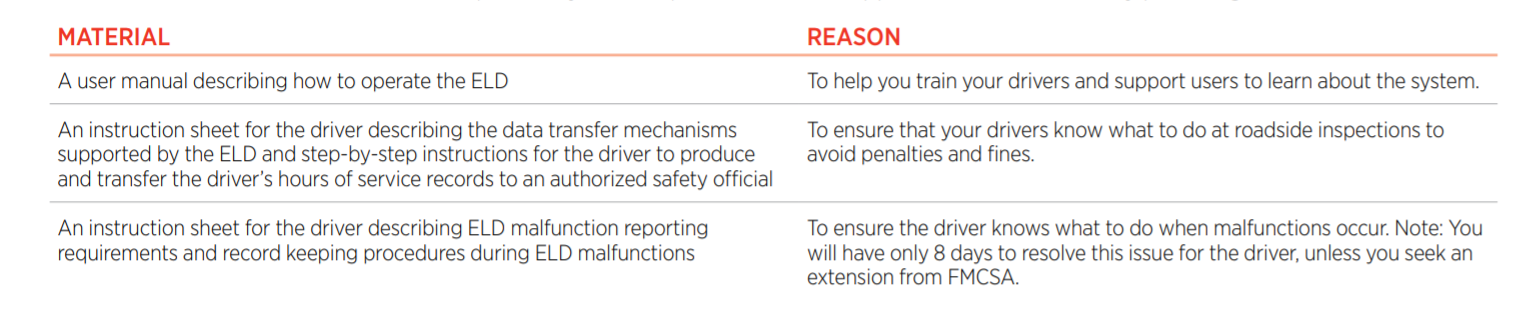
There are many approaches to getting current with ELD compliance requirements. As a bare minimum, it is a requirement to make sure the following materials are included:

The ELDs on the FMCSA’s registry does not guarantee your compliance. You must tread carefully. Devices that do not meet FMCSA’s requirements could cause problems, from civil penalties to an audit of your whole fleet. Title 49, section 521 details that a driver or carrier could face civil penalties from $1,000 to $10,000 per offense.
Confident ELD providers undertake third-party certification to validate compliance. While it is not required, independent testing can go a long way. The credibility of an unbiased report shows that a particular ELD provider is willing to back up their solution.
The FMCSA requires all devices do the following:
The Final Rule sets out details of the technical standards and functional specifications for an ELD to be considered compliant and eligible for self-certification and registration on the FMCSA website.
The ELD must support:
The good news? Despite big changes, ELD compliance is making life a lot easier for drivers and fleet managers. You can quickly manage the hours your drivers are behind the wheel to avoid unsafe and fatigued driving. More data and insight on driver activity can help fleets operate safer on the roads.
Cost is another factor. Consider how many work hours went into old pencil-and-paper logging and reporting. Dispatch is able to more efficiently plan routes, as well. These value-add operational benefits justify the installation and ongoing use of ELDs.
Reporting requirements are expedited by electronic logging. Software makes what used to require long hours and several staff members go much quicker, and ensures data is current, secure and accurate.
Learn more about how we can meet your fleet’s needs as a trusted ELD partner.